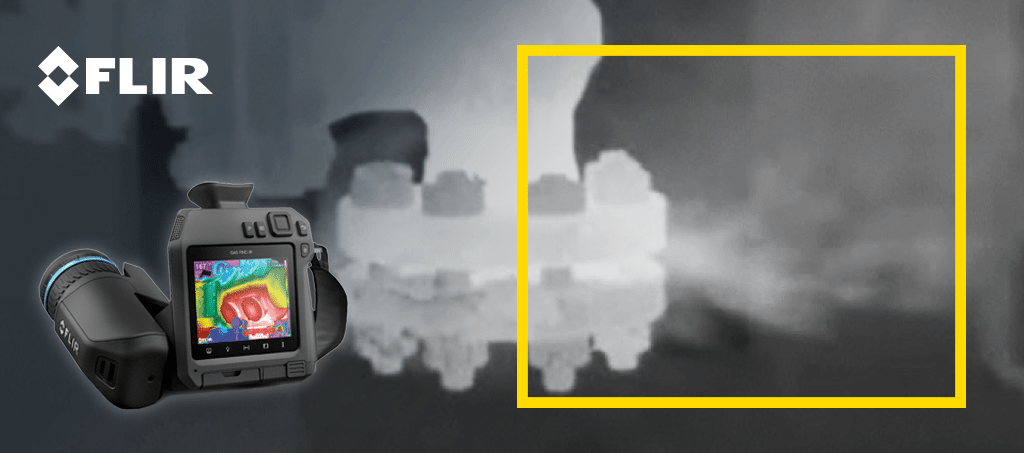
The New GF77 GasFindIR is the first uncooled optical gas imaging thermal camera designed for detecting methane.
Now, with the advancements of newer technology that relies on uncooled detectors and spectral filters, it expands the available OGI offering to include a much more cost effective option.
But what are these technologies, how do they work and what advantages or limitations do they have? Gain a better understanding with these three informative whitepapers from the experts at FLIR:
The GF77 handheld camera offers inspection professionals the features they need to find potentially dangerous, invisible methane leaks at roughly half the price of cooled gas inspection thermal cameras.
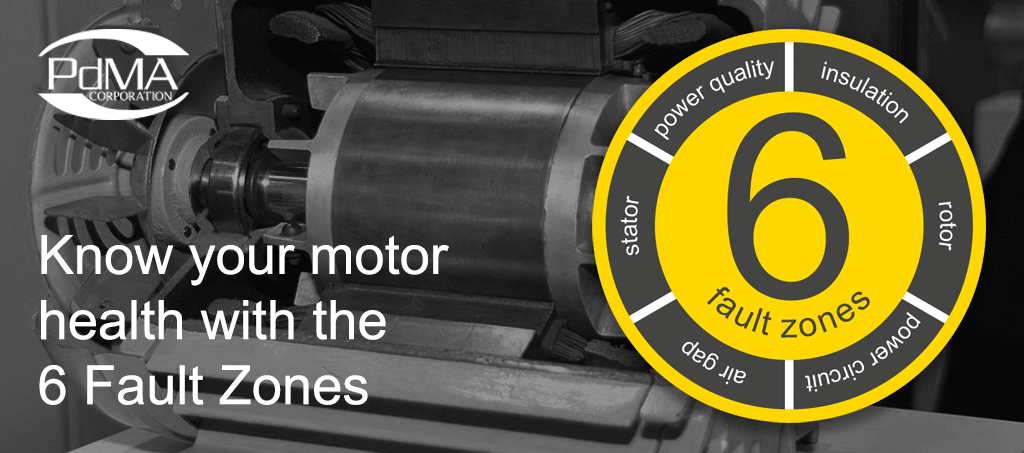
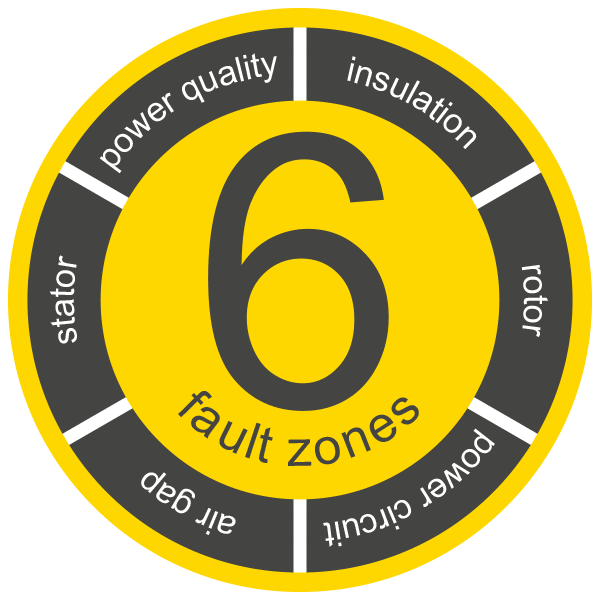
To confidently report the electrical condition of a motor, there are six areas of interest known as Fault Zones that must be looked at during the troubleshooting effort.
These Fault Zones are Power Quality, Power Circuit, Stator, Insulation, Rotor, and Air Gap.
Power Quality: Quality of the voltage and current
Stator: Turn-to-turn insulation and internal coil connections
Air Gap: Quality of the air gap between the rotor and the stator
Insulation: Winding to ground insulation
Rotor: Health of the rotor cage and laminations
Power Circuit: Circuit supplying power to the motor
This insightful white paper by PdMA’s David L. McKinnon will provide a brief introduction to a Six Fault Zone approach for predictive maintenance on motors.
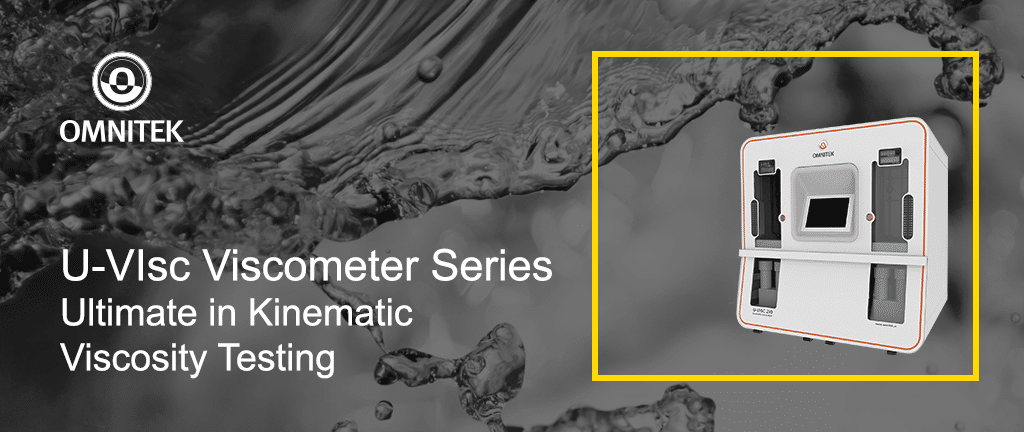
The OmniTek U-VIsc viscometry system delivers the ultimate in kinematic viscosity testing with high throughput and unattended operation.
The U-VIsc viscometry system was designed with full ASTM D445 compliance in mind, combined with low solvent consumption, high unattended throughput, ease of use and reliability.
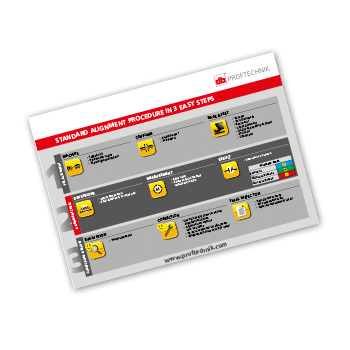
With specially designed brackets and new measuring methods, PRÜFTECHNIK’s ROTALIGN® Touch platform allows cardan shafts to be aligned without removing the shaft.
Cardan shafts are common types of couplings in many industries such as pulp and paper, marine and shipping, steel, automotive, cement. They can be either fully rotatable, partially rotatable or non-rotatable, very large and heavy, and difficult to access. Usually, a combination of these configurations applies, making many cardan shaft alignment applications unique and challenging.
Below are a few helpful tips and information from PRÜFTECHNIK to assist you with dealing with this challenging task with ease.
See the condition of your equipment at any given time with Gill Oil Debris Sensors.
A Gill 4212i’s Oil Debris Sensor was installed on a critical machine from a coal plant in the Mpumalanga area for real-time wear and temperature monitoring.
The Gill 4212i condition sensor has a visual display and comes with the following features:
4 Measurement options
3 Output options
Captures and retains ferrous debris
Continuous real-time monitoring
Easy installation
Low cost of ownership
The sensor was installed on a Discard Conveyor Gearbox, operating with ISO 320 lubricant. On installation of the sensor, the gearbox oil was drained but the gearbox was not flushed as requested. Metal particles were obviously left behind.
Channels set on the Gill device included Fine Metal Wear, Coarse Metal Wear and an Oil Temperature Alarm set at 80°C (which will flash red on the Gill sensor’s visual display). Any indication of Coarse Metal Wear would be a red flag, which would normally be associated with larger failures such as a chipped tooth on one of the gears. Acceptable behaviour or readings on Fine Metal Wear stage (orange) would a slow increase to reach full stage over a period of 12 months.
The sensor was installed on a Discard Conveyor Gearbox, operating with ISO 320 lubricant. On installation of the sensor, the gearbox oil was drained but the gearbox was not flushed as requested. Metal particles were obviously left behind.
Channels set on the Gill device included Fine Metal Wear, Coarse Metal Wear and an Oil Temperature Alarm set at 80°C (which will flash red on the Gill sensor’s visual display). Any indication of Coarse Metal Wear would be a red flag, which would normally be associated with larger failures such as a chipped tooth on one of the gears. Acceptable behaviour or readings on Fine Metal Wear stage (orange) would a slow increase to reach full stage over a period of 12 months.
The 4 x 9V alkaline battery setup was used in this particular case study.
Several readings were taken over a period of two months, from the Gill Sensor’s display. During this time, there were no changes to the Coarse Metal Wear and Temperature Alarm indicators. The Fine Metal Wear indicator increased from 2 to 5 steps (lights.)
These readings were compared with the results from an oil sample taken after the last reading. The Oil Analysis Report indicated that the Fe (Iron) count increased– mirroring the reading from the Gill Sensor. Furthermore, the sample confirmed that the maximum wear particle size in the oil sample was 20 microns, supporting the sensors reading of no coarse particles.
With the Gill Sensor installed, real-time oil monitoring is possible, and not only with every oil sample taken which could range from 30 days to 3 months apart. Gill Sensor readings are taken from a visual display, which encourages the general inspection of equipment wear by attending technicians. An added benefit is that the magnetic properties of the sensor remove wear particles from the oil during normal operation, acting as a filter in the system, but most of all – it is affordable.
It is clear that Gill Sensors could be the first line of defence in your Lubrication Management practice.
Learn more about the Gill Oil Sensors – or contact our skilled staff by filling in the form below.
Striving for high frequency industrial accelerometers.
“As predictive maintenance teams in industrial facilities strive for a more complete picture of their equipment’s health, high frequency vibration measurements have become a crucial addition for identifying faults, such as motor and pump bearing defects and gear tooth inconsistencies in high-speed gearboxes. As a result, there is an upsurge in demand for vibration sensors with a high frequency response.”
– excerpt from Uptime Magazine, Feb-Mar Issue, Making It In A High Frequency World by Meredith Christman
This insightful article by Meredith Christman, Product Marketing Manager for IMI Sensors, covers the theory of high frequency, as well as the factors necessary and advances in accelorometer technology to achieve these high frequency measurements.
It is incredible to see the advances made in the field of infrared thermography since the first hand-held cameras hit the market, not only from the actual thermal detector technology, but also the overall functionality of the cameras.
Case in point, FLIR’s new Exx-Series cameras are much more than their impressive infrared capturing capabilities, but have become an all-in-one tool to enhance and improve your condition monitoring experience. From its quick start-up and intuitive interface you can operate with one hand to the ease with which you can annotate, save and organise your images.
In the video below, see how the new Exx Cameras tags the GPS location of the images taken.
Some other key features include:
Interchangeable, auto-calibrating lenses
Laser distance meter for measurement information and crisp, accurate focus
Cardan Shaft Alignment used to be a very expensive exercise, due to the time it took to remove the Cardan Shaft itself.
Now (thanks to Prüftechnik’s innovation), it is possible to do a Cardan Shaft Alignment, without having to remove the Cardan Shaft itself. This results in a huge Cost saving (Labor Cost and Cost due to Production loss). Let Yellotec help you to save Costs, by introducing this new Innovative method for Cardan Shaft Alignment?
See Prüftechnik Success Story below, as an example of how this was done.
For more information on this article or any of our Shaft Alignment products, feel free to contact us.
Yellotec is one of the leading suppliers of the most effective and efficient technology in machine health and reliability monitoring equipment in Africa. As well as providing services that help plant and equipment managers to predict all failures as well as prevent major failures in the future.
For expert advice and the latest in machine reliability technology Please feel free to contact us either by Contact Number, Email, Contact form or Visit us.
We all know what it’s like when machine adjustments suggested by laser-optical alignment devices don’t achieve their target in one go.
The verification measurement is performed after the alignment job fails to confirm the machine corrections that have been performed – and then additional time-consuming, material-intensive work steps are required to get the unit back into the right alignment.
Contact Yellotec
For more information on this article or any of our alignment products, feel free to contact us.
Yellotec is one of the leading suppliers of the most effective and efficient technology in machine health and reliability monitoring equipment in Africa. As well as providing Services. As well as providing services that help plant and equipment managers to predict all failures as well as prevent major failures in the future.
For expert advice and the latest in machine reliability technology Please feel free to contact us either by Contact Number, Email, Contact form or Visit us.
The above video of the Gill Sensor installation demonstrates how the enclosure worked with the micro-switch that activates battery power.
The World’s first Kiln Shell Monitoring System based on Microbolometer Infrared Camera Technology.
As of 6th December 2021, Yellotec has added an updated article on kiln monitoring. Please feel free to visit the article to see what is happening as of 2021/2022
IRT KilnMonitor® is a full-featured computer system that allows you to monitor, process and trace data from rotary cement kilns. Unlike existing solutions, it is based on standard microbolometer radiometric infrared cameras, as used in a variety of different applications.
Historically rotary kiln owners used Line scanners to protect expensive kilns against failure and overheating caused by refractory thinning and damage. This method incurred high capital and maintenance costs, with lengthy repair turnaround times. All of the above are now eliminated with the new IRT KilnMonitor® designed by Yellotec and Grayess – (a leading German software development company), and now the first such Kiln System has been installed on a rotary Cement Kiln in Italy.
The system has major advantages over other methods; from reduced maintenance costs, high-resolution thermal profiles, AND internal refractory profiling via 3D modelling, significantly reduced capital costs, and maximised up times – the revolution has finally started.
Here are features of just one of four options of data viewing – The Virtual 3D Kiln Display:
Kiln “pipe” with infrared image on the surface.
The kiln is rotating at a real speed.
Rings and other shadow zones.
Position of the top kiln.
Real coordinates ruler with the kiln refractory and shadow zones structure.
The brick refractory with calculated thickness.
Coating with calculated thickness.
Possibility to view from different angles and look inside the kiln.
Section view with detailed kiln information at the section.
Split by refractory zones view (also works in section and end views).
Colourized refractory zones.
Yellotec is proud to be the Grayess partner for Africa and we will work tirelessly to provide these needed improvements and cost savings to Kiln owners/operators in South Africa. Please download the brochure to read the full specification and features of the system.